After-hours email is no longer the exception: it has become the norm, even in countries that passed laws to limit it. The available data shows that a right-to-disconnect policy improves work-life balance, but only when it is actually enforced, which remains rare. The topic is back in 2026 with a ruling from France’s highest court and an EU initiative on job quality in preparation. Here is what the research really shows, and what it does not.
Context: a recognized right, a stubborn practice
France led the way. Since 1 January 2017, Article L2242-17 of the French Labour Code has required companies in scope to negotiate how the right to disconnect works, or failing that to adopt a charter after consulting employee representatives. As France’s occupational safety institute INRS notes, the Code sets no specific penalty for failing to respect that right day to day.
At EU level, the Commission consulted social partners as early as April 2024, then opened a second consultation phase in July 2025 to tackle the “always on” culture. No directive has emerged yet. The issue may now be folded into the future Quality Jobs Act, whose consultation closed on 28 September 2026.
What the data shows
Receiving messages after hours is the norm
In its November 2023 report, Eurofound surveyed employees and HR managers in Belgium, France, Italy and Spain. Eight in ten workers said they regularly receive work communications outside working hours, whether or not their company had a right-to-disconnect policy. The law has barely changed the volume of contact.
The workday stretches at both ends
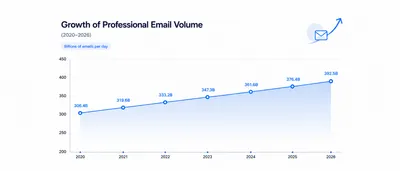
Microsoft’s Work Trend Index, published in June 2025, describes an “infinite workday”. Among people online at 6 am, 40% are reviewing email to set the day’s priorities. By 10 pm, 29% of active workers are back in their inbox. Nearly 20% of employees active on weekends check email before noon on Saturday and Sunday. The average worker receives 117 emails a day. An important caveat: these figures come from Microsoft 365 telemetry and exclude companies based in the European Union.
A policy helps, if it is applied
Eurofound also found that 92% of workers in companies with a right-to-disconnect policy rate their work-life balance positively, against 80% elsewhere. That is a correlation, not proof of cause. Above all, the same report stresses that only half of the workers covered are aware of concrete actions to implement the policy: a charter without training or follow-up stays on paper.
Courts look at obligation, not connection
On 25 March 2026, France’s Cour de cassation ruled that an employee who chose to answer emails during sick leave could not claim a breach of the right to disconnect, since the employer had not required any reply (ruling no. 24-21.098, summarized by the French administration). What matters legally is not the connection itself, but explicit or implicit pressure to respond.
Implications for professionals
If the law does not reduce message volume, the real lever is expectations. A team that states plainly that an email received after 7 pm needs no reply before the next morning protects its members better than a generic charter. Scheduled send, available in both Gmail and Outlook, also lets managers write in the evening without the message landing in the evening.
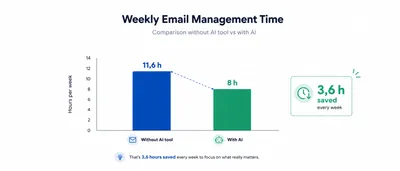
In our view, part of the urge to check email late comes from next-day anxiety: the fear of an unmanageable inbox in the morning. Cutting the time it takes to catch up reduces that pressure. That is one of the effects tools like Scribarius aim for, by sorting emails and preparing reply drafts overnight.
What the data does not show
The available numbers have blind spots. Microsoft’s measurements do not cover European companies, and the Eurofound study only covers four countries. No solid source currently measures time spent specifically on evening email across Europe. The next step to watch is the EU proposal expected after the Quality Jobs Act consultation. For the wider picture, read our state of business email in 2026.
Tags